

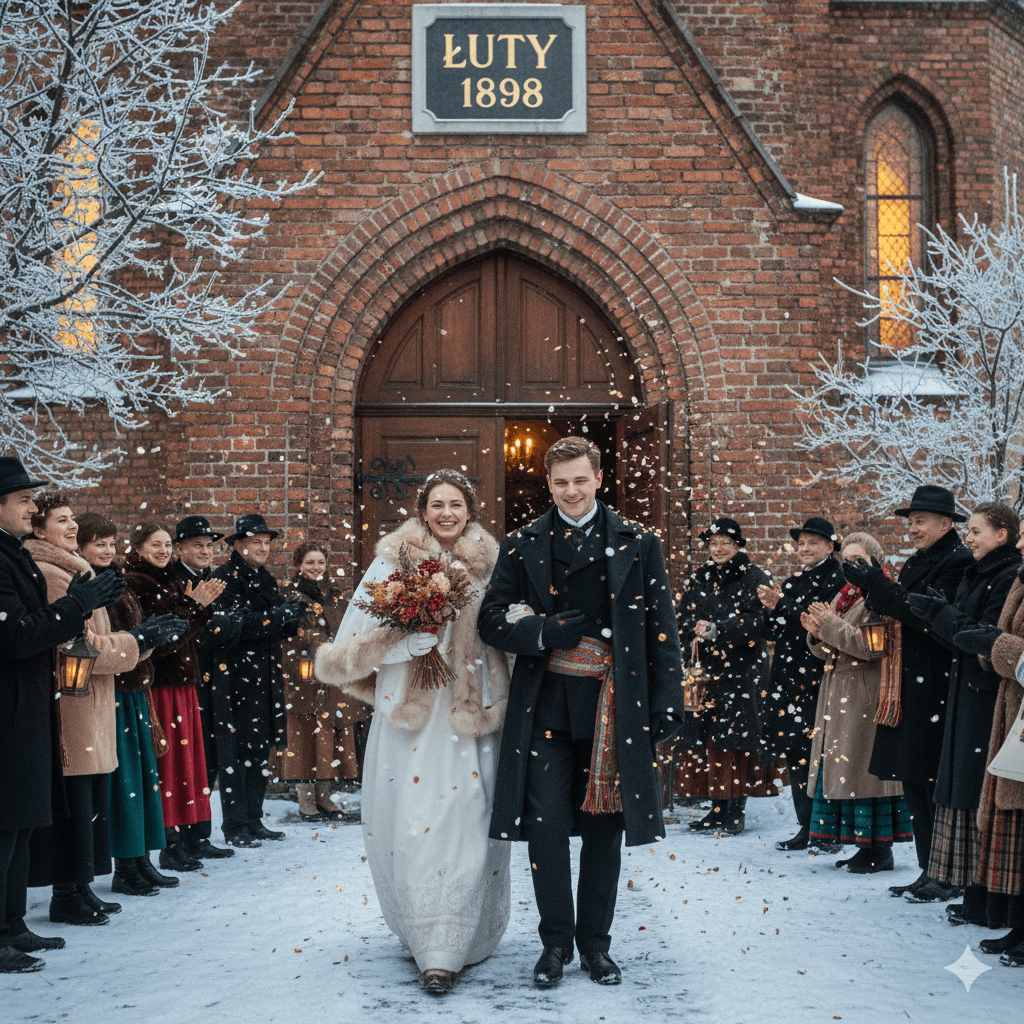
I have been researching my Polish ancestry by going through Catholic church records and I had started seeing a pattern for a high number of weddings taking place in February. I wanted to understand why February Polish weddings were so common and here is what I found.
That observation in Polish church records is likely due to the timing of the Catholic liturgical calendar, specifically the periods of Advent and Lent, which were historically considered times of penitence when festive public celebrations like weddings were traditionally discouraged or forbidden.
The Liturgical Calendar Constraint
The peak in February weddings is best explained as a concentrated period of opportunity just before the start of Lent.
- Advent (discouraged): The period of Advent (starting four Sundays before Christmas) was traditionally a penitential season leading up to Christmas. Weddings and dancing were discouraged during this time.
- Christmas Season (busy, but allowed): The Christmas season follows Advent. While weddings could take place, this is also a time of other religious and family observances.
- The Carnival Season (Karnawał) (encouraged): The period between Christmas and the start of Lent is known as Karnawał (Carnival or Shrovetide). This was historically a season of feasting, celebration, and public merriment—a perfect, unrestricted window for weddings.
- Lent (forbidden/discouraged): Lent (beginning on Ash Wednesday) is a 40-day solemn period of fasting and prayer leading up to Easter. Traditionally, the Catholic Church strictly forbade weddings and all festive events during Lent.
The February Wedding Rush
Since Lent’s start date (Ash Wednesday) is determined by the date of Easter, it shifts every year, but it frequently falls in March or sometimes in late February. This means that February often contains the final, unrestricted weekends of the Carnival season, creating a rush for couples to get married before the period of Lent begins.
A large number of weddings would be scheduled in February to ensure the celebration could take place before the solemnity of Lent shut down all public festivities.
Other Traditional Wedding Customs
While the liturgical calendar is the main reason, it’s interesting to note a separate, persistent Polish wedding superstition regarding the “lucky” months for marriage.
- The “R” Rule: Polish tradition holds that it is good luck to marry in a month that contains the letter “R” in its Polish name.
- Lucky Months (contain “R”): Marzec (March), Czerwiec (June), Sierpień (August), Wrzesień (September), Październik (October), Grudzień (December).
- February’s Polish Name: The Polish name for February is Luty, which does not contain the letter “R.”
Therefore, the high volume of marriages in February in the historical records is likely a practical necessity (beating the start of Lent) that temporarily overrides the long-standing folk tradition about the luckiest months.
Conclusion
The patterns hidden within historical documents can tell us incredible stories—you just have to know how to spot them. The mystery of the high number of February Polish weddings in old church books is a perfect example of how the rhythms of faith and culture dictated the choices of our ancestors. These spikes weren’t random; they were a carefully timed rush to celebrate during the unrestricted joy of Karnawał before the solemn, wedding-prohibiting season of Lent began. By noticing this trend in the dates you find, you gain a richer understanding of your family’s world—a world governed not by modern convenience, but by the immovable, yearly cycle of the liturgical calendar. Keep searching those dates; the stories they tell are truly fascinating!

Leave a Reply